
Elements
(Dynamic)
Dynamic elements automatically pull content in from other places (like a feed of blog posts).
In many cases, you can use CSS classes like .bg-dark, .larger or .invert to quickly modify the appearance of many of these sections. To learn more about available classes, visit your Style Guide.
Looking for more elements?
Visit your static elements library.
⚡️ Quick Tip
How to use classes in the page builder
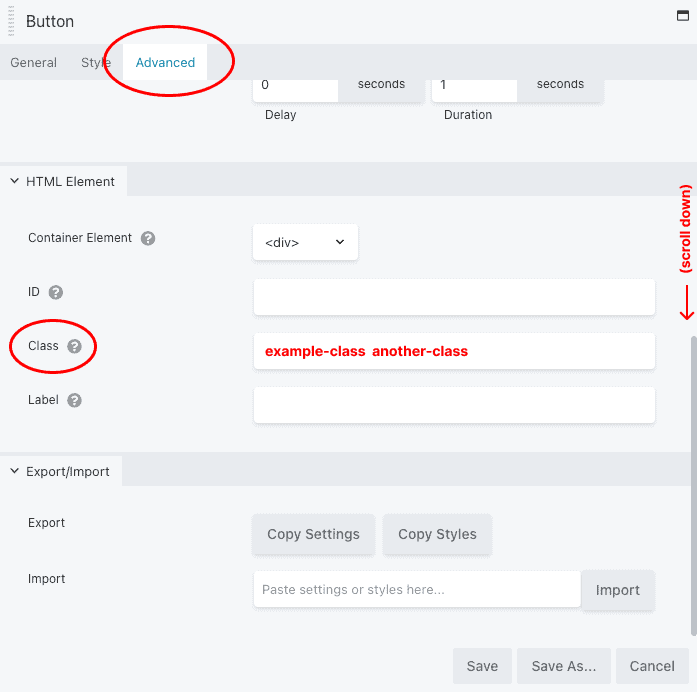
All page builder elements, from rows, to columns, to modules, allow you to assign custom CSS classes to manipulate their appearance in a predefined way. We have indicated when this is the case with any of the elements below.
To assign a class to an element:
- Open the Row, Column, or Module settings.
- Click the "Advanced" tab.
- Scroll to the bottom.
- Enter your desired class in the "Classes" field. (To add multiple classes, separate them with a space.)
- Hit "Save"
Bonus: You can add the class invert to any element to create inverted text (like this!)
Lists
Dynamic - Complex List
Tip: Use this as a base for creating your own feed item layouts. This one is useful for meta-heavy results.

Mental Well-Being: A Coach’s Must-Have Toolbox
Over the years, I’ve watched the coaching landscape change. Mental well-being is…
ICF Converge 2025 On Demand
ICF Converge 2025 is the premier global coaching conference where the coaching community comes together to build powerful connections, accelerate growth, and shape what’s next. This year’s theme — Honoring Legacy. Igniting Connections. Driving the Future. — invites you to reflect on the profession, connect deeply in the present, and co-create the future of coaching.
2025 ICF Global Coaching Study Executive Summary
Discover the key trends shaping the coaching profession in the 2025 ICF Global Coaching Study Executive Summary. Based on insights from more than 10,000 coaches worldwide, this snapshot highlights record growth, rising revenue, and strong optimism about the future of coaching.
ICF Live: What’s Really Happening With AI
Last month, CEO Magdalena Nowicka Mook was joined by Susan Caesar, ICF’s…

How Coaching Is Driving Inclusion Around the Globe: Lessons from Local ICF Chapters
When a group of mothers in Kazakhstan, many of whom had never…
The International Coaching Federation Announces Inaugural Converge Summit 2026 in Paris
–First-of-its-kind event will bring global coaching community together in Europe to shape…
Grids
Dynamic - Simple Grid
Tip: Use this as a base for creating your own grid layouts. The partial is already prepped.




Dynamic - Complex Grid
Tip: Use this as a base for creating your own grid layouts. The partial is already prepped.

Trust, Transformation and Technology: Coaching in the Financial and Professional Services Sectors
The Global Growth Blog Series | Part 3 ICF’s Global Growth blog…
Nominate a Coach for the ICF Coaching Impact Awards
Think for a moment about the people in our profession who changed…
Apply for the ICF Professional Coaches Nominating Committee
The ICF Professional Coaches Nominating Committee is seeking new members to support…
The Balcony View: A Systems-Inspired Approach to Coaching
We invite you to step back from the dance of team dynamics and observe the wider system at play. In this experiential workshop, you will explore how a systems-inspired perspective helps teams and organisations access greater clarity, alignment, and creative potential. By learning to work from the “balcony view,” you will connect individual behaviours to patterns, relationships, and the broader organisational context.
From Story to Self: Integrating Artistic Process
This experiential session invites coaches to intentionally integrate story, poetry, and meditation into their practice to deepen client awareness, presence, and insight. Grounded in research on creative process and mindfulness, participants will explore how artistic and contemplative approaches strengthen active listening, ethical attunement, and trust-building while remaining aligned with professional coaching standards.
One Map: Science of Leadership & Well-being
Coach Meg will explore how each capacity integrates a way of valuing, thinking, feeling, acting, and leading in the world. She will demonstrate how coaches can cultivate all of these perspectives as coaching intelligence aligned with ICF competencies, including using an AI system she designed called Multi-Perspective AI.
Diversity, Equity, Inclusion, and Belonging (DEIB) Meaningful Focus Areas and Goals
ICF’s FY 2027 DEIB Focus Areas advance diversity, equity, inclusion, and belonging in coaching through representation, education, accessibility, and policy initiatives, fostering a more inclusive coaching community.
Coaching as a Strategic Enabler of Transformation with Saudi Electricity Company
How does an organization move from using coaching to building a coaching culture? This award-winning case study highlights how Saudi Electricity Company embedded coaching into its leadership strategy to support enterprise-wide transformation.
Named a 2025 ICF Coaching Impact Award Emerging Organization, the company expanded coaching from senior leaders to early-career talent and emerging leaders. With strong executive sponsorship and intentional design, coaching became part of everyday leadership conversations. The case study shares real outcomes in engagement, leadership readiness, and internal development, offering practical insight for organizations looking to make coaching a way of working.
Microsoft Customer and Partner Solutions Coaching Ecosystem Sparks Transformation
What happens when coaching becomes part of everyday work, not a benefit for a few? This award-winning case study shows how Microsoft’s Customer and Partner Solutions (MCAPS) division built a coaching culture at scale for more than 70,000 employees.
Recognized as the 2025 ICF Coaching Impact Distinguished Organization, MCAPS expanded coaching beyond senior leaders to include one-on-one coaching, group coaching, manager-as-coach training, and employee coach pathways. The results include stronger engagement, clearer career direction, and increased internal mobility. This case study offers a practical example of how inclusive coaching can strengthen leadership, performance, and growth across an entire organization.
Mentor Coaching Community of Practice
Learn more about the ICF Mentor Coaching community of practice, which is focused on fostering genuine connection and shared learning amongst mentor coaches.
DEIB MRG Kaleidoscope
The ICF Member Resource Group called Kaleidoscope is a group that focuses on building community in an inclusive space for individuals across the full spectrum of sexual and gender identities and experiences.
Team & Group Community of Practice
Learn more about the ICF Team and Group community of practice, which is focused on challenges and opportunities of coaching teams, groups and organizations.